Peptide COA Display: How to Show COAs Buyers and Processors Trust
What a credible peptide COA includes, the red flags buyers look for, and how to show batch-matched certificates on every product page.
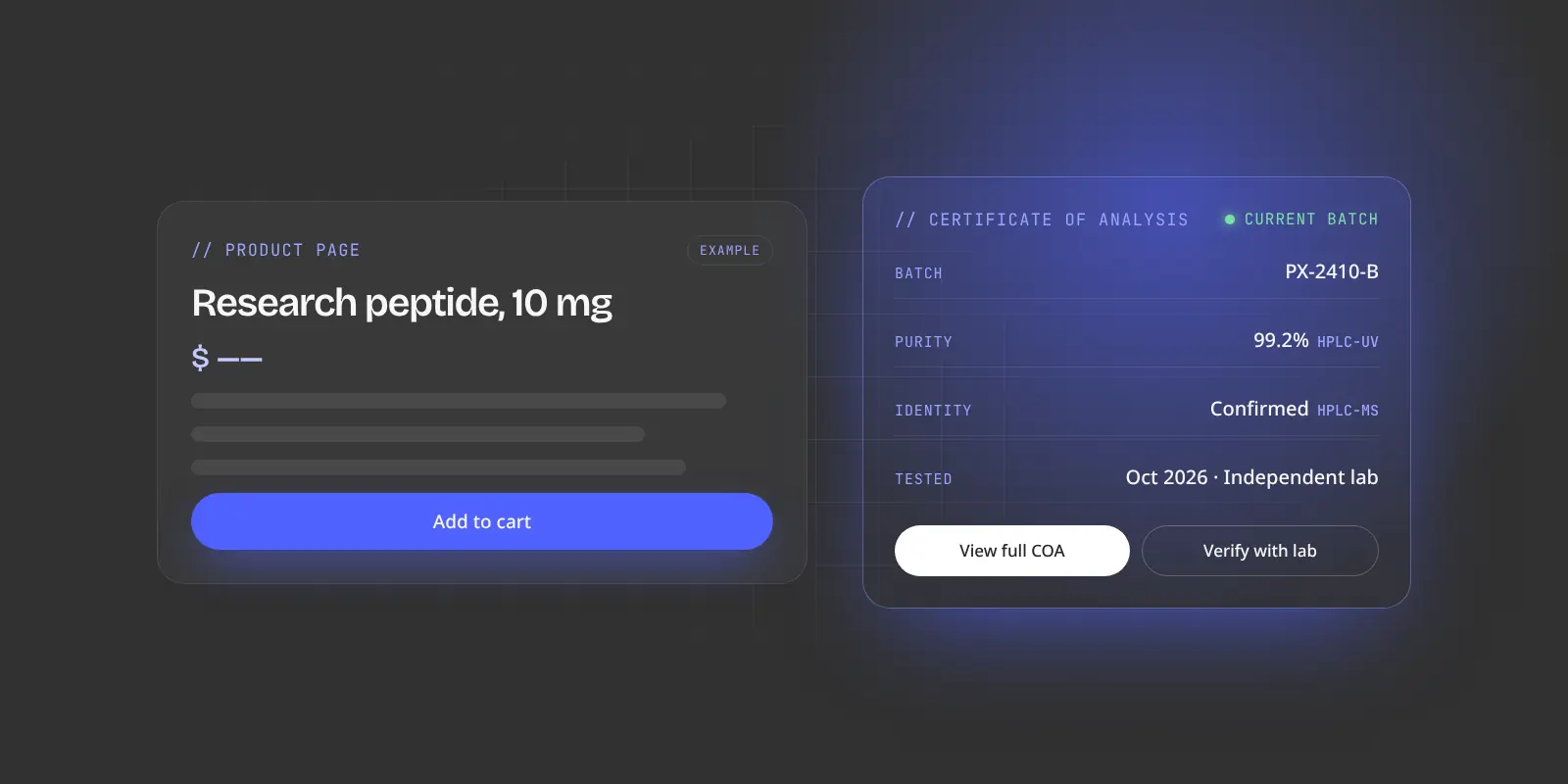
A credible peptide COA names the batch, confirms identity by mass spectrometry, measures purity by HPLC, and shows the lab and test date. Show a short COA summary on each product page, matched to the batch you are currently shipping, with a link to the full certificate and a searchable library of past batches.
For a research peptide store, the certificate of analysis (COA) is the single most important page element after the price. Buyers check it before they order. Payment processors look for it when they review your site. And in 2026, more buyers have learned to spot a COA that’s reused, edited or doesn’t match what’s in the vial.
Yet many stores still treat COAs as an afterthought: a folder of PDFs, one certificate covering every batch, or a “COA available on request” line. This guide covers what a credible COA includes, the red flags buyers look for, and how to display COAs on your store so they actually build trust.
Why COAs matter more than ever
- Buyers are more skeptical. Independent testing projects and buyer communities now publish guides on reading COAs, and they actively call out stores with weak or suspicious certificates.
- Processors look for proof of quality. Underwriters review your product pages. Clear, batch-specific documentation supports the case that you run a serious research supply business.
- It’s your strongest research-use signal. Technical documentation tells every visitor, and every reviewer, that your store is about analytical quality, not personal results.
What a credible peptide COA includes
A COA is only as useful as the details on it. A buyer reviewing yours will look for:
| Section | What it should show |
|---|---|
| Sample details | Product name, stated amount, your company name, batch or lot number, date the lab received the sample |
| Identity | Confirmed by mass spectrometry (often HPLC-MS), with the method named |
| Purity | A percentage measured by HPLC, with the method named |
| Quantity | Measured amount in mg, ideally as a percentage of the label claim |
| Additional tests | Where performed: endotoxins, heavy metals and similar screens |
| Lab details | Lab name, contact details, accreditation, test date and an analyst or director signature |
One distinction matters a lot: HPLC alone measures purity, but doesn’t confirm the molecule’s identity. A certificate showing 99% purity with no identity test tells a careful buyer that something is 99% pure, not what that something is.
Red flags buyers look for
- No batch number, or a batch number that doesn’t match the vial
- One COA used for every batch of a product
- No way to verify it with the lab that supposedly issued it
- A different company name on the certificate than on your store
- Missing methods, dates or lab contact details
- Signs of editing: mismatched fonts, misaligned numbers or values that look too round
If your current COAs have any of these, fix them before you invest in design. A beautiful display of a weak certificate does more harm than good.
Never edit a lab-issued certificate, even to fix a typo or update branding. Ask the lab to reissue it. An altered COA, once spotted, can end trust in your store overnight.
How to display COAs on your store
1. Put the COA on the product page, not in a separate folder
Show a COA panel right on each product page, near the price and the add-to-cart button. Include a short summary buyers can read at a glance:
- Batch number currently shipping
- Purity percentage and method
- Identity confirmation and method
- Test date and lab name
- A button to view the full certificate
A summary helps buyers on mobile, where opening PDFs is a chore. The full certificate stays one tap away for anyone who wants it.
2. Match the COA to the batch the customer receives
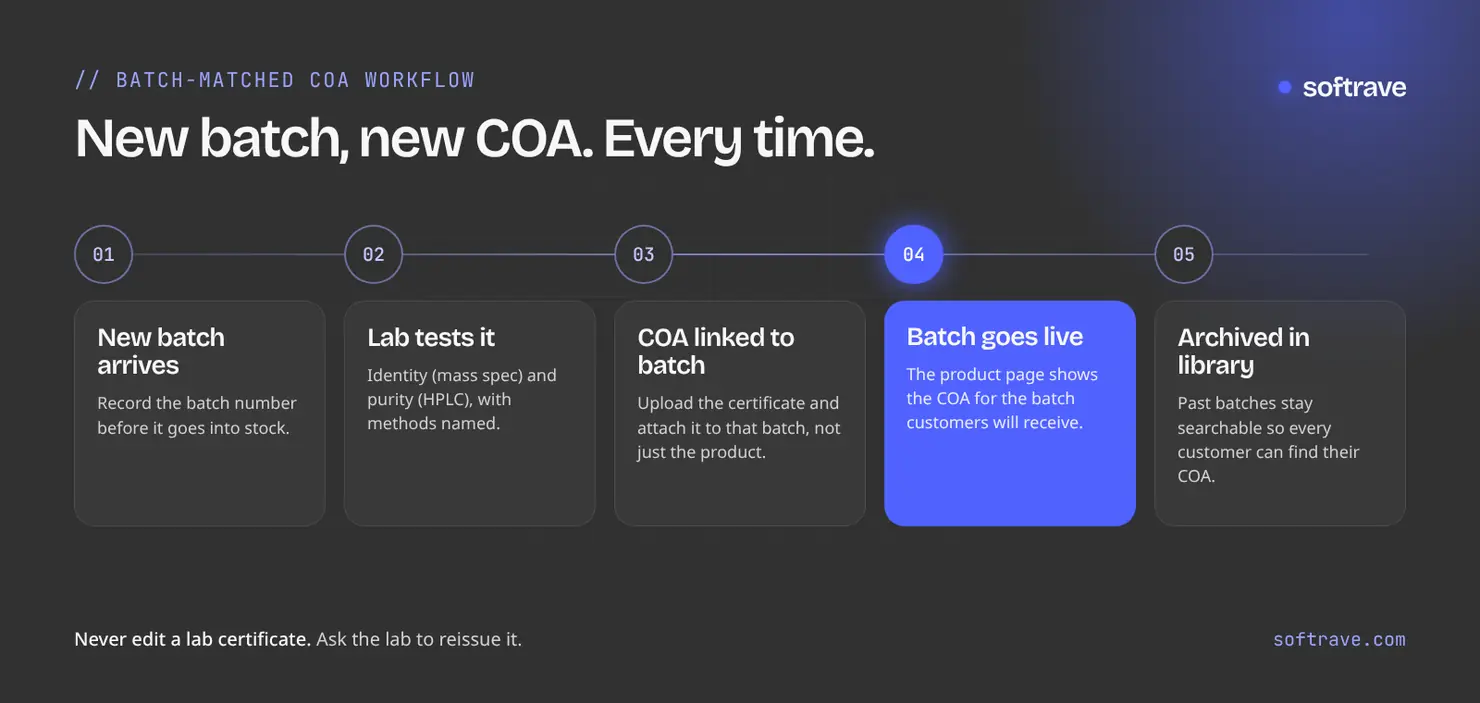
This is what separates serious stores from the rest. Every batch gets its own COA, and the product page shows the certificate for the batch you’re currently shipping. When stock moves to a new batch, the page updates with it.
On WooCommerce, this means linking COAs to batches in your inventory, not just attaching a file to the product. With custom fields per batch, the right certificate appears automatically when a batch goes live.
3. Build a searchable COA library
Add a COA library page where buyers can look up any batch, current or past, by product or batch number. Customers who received an older batch can still find their certificate. It also shows you’ve been testing consistently over time, which a single current COA can’t do.
4. Make every COA verifiable
Where your lab offers it, link to the certificate on the lab’s own website or include a verification code the buyer can check. Some stores add a QR code to the vial label that opens the batch’s COA page. Verification turns “trust us” into “check for yourself.”
5. Keep the presentation technical
Your COA panel should read like lab documentation, not marketing. Avoid putting benefit language or study summaries next to test results. Purity, identity, methods and dates are what matter here. They also support the research-use positioning that payment processors and regulators expect to see.
Quick setup checklist
- Confirm each product has a current, batch-specific COA from a named lab
- Check each COA includes identity and purity tests, with methods
- Record which batch is currently shipping for each product
- Add a COA summary panel to every product page
- Link full certificates, and lab verification where available
- Build a searchable COA library for current and past batches
- Set a routine: new batch, new COA, page updated before the first order ships
A proper COA system is one of the main factors in what a peptide store website costs.
nn
Need a COA system built?
Softrave builds peptide stores with a full COA system included: batch-matched certificates on every product page, a searchable library and verification links. See our peptide store website development service, or get a free store health check and we’ll review how your current COAs are presented. If you’re moving off Shopify at the same time, our migration guide covers the full process. For a finished example, see our Pure Peptides Labs case study, which includes COA access and a research catalogue.
Frequently asked questions
What should a peptide certificate of analysis include?
The product name, batch or lot number, identity confirmed by mass spectrometry, purity measured by HPLC with the method named, the lab name and contact details, and the test date.
Is an HPLC purity result enough on its own?
No. HPLC measures purity but does not confirm which molecule is present. A credible COA pairs it with an identity test such as mass spectrometry.
Should every batch have its own COA?
Yes. Each product page should show the certificate for the batch you are currently shipping. Using one COA for every batch is one of the first things careful buyers check for.
Where should COAs appear on a peptide store?
On each product page, near the price, as a short summary with a link to the full certificate. A searchable COA library for current and past batches helps customers find older certificates.