Peptide Payment Processing: How to Get Approved and Avoid Frozen Funds
Why mainstream processors decline peptide stores, what high-risk underwriters check, what it costs, and how to keep your merchant account in good standing.
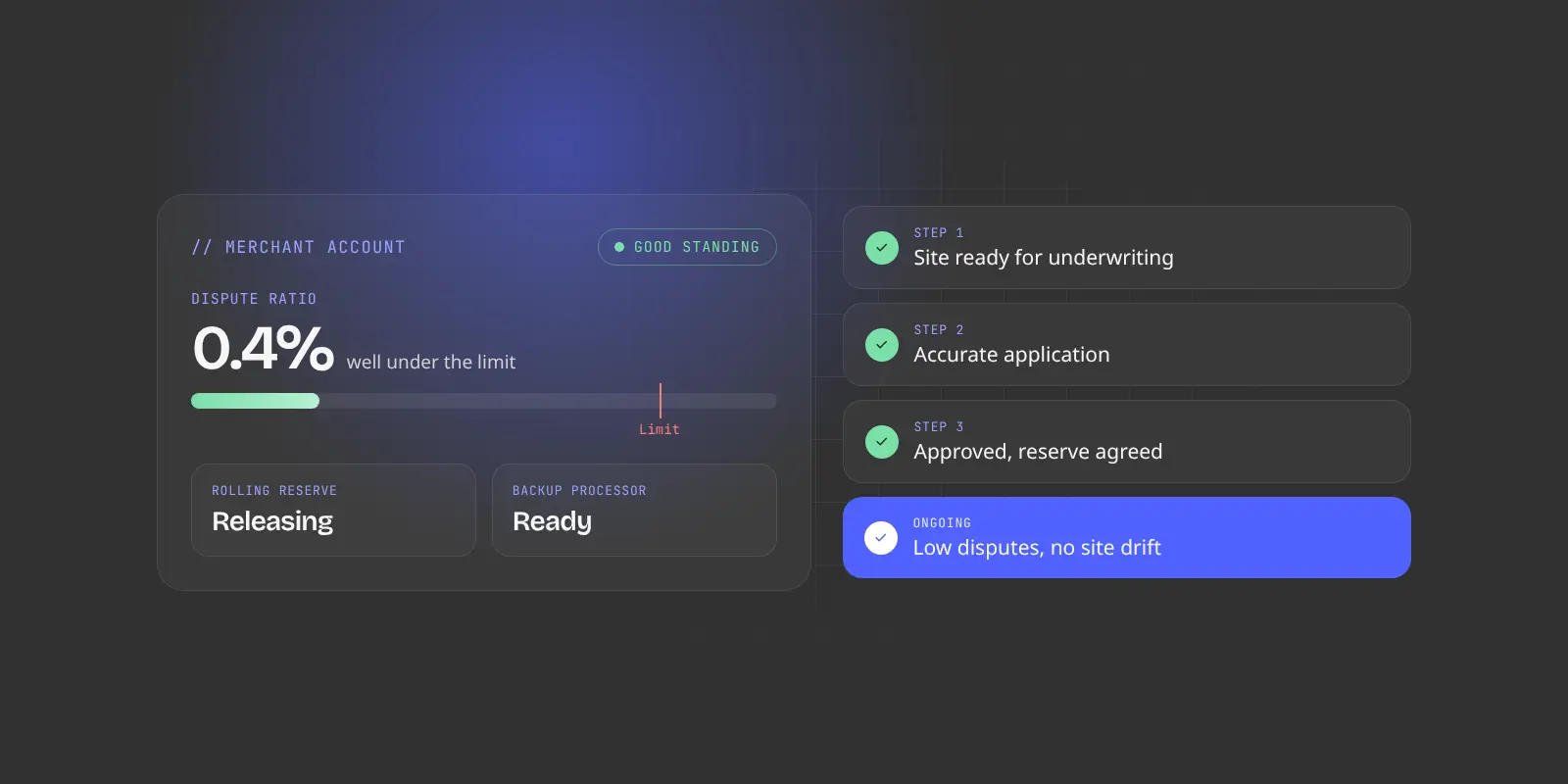
Stripe, PayPal and WooPayments generally won't process research peptides, so most stores need a high-risk processor. Expect an underwriting review of your website, higher fees and a rolling reserve (often around 10% for 3 to 6 months). Keep your account safe with accurate disclosure, a clean site and a dispute rate well under the limit.
Payments are where most peptide stores struggle. Mainstream processors won’t take the category, high-risk processors look closely before approving you, and even after approval, accounts can be frozen if things go wrong. This guide explains how peptide payment processing works, what processors check, what it costs and how to keep your account in good standing.
This is general information, not financial or legal advice. Processor terms vary, so read your own agreement carefully.
Why Stripe, PayPal and Shopify Payments don’t work
The mainstream processors either prohibit research peptides or treat them as restricted:
- Stripe lists “incorrectly labeled research chemicals” as a prohibited business.
- WooPayments, WooCommerce’s own payment service, lists “peptides and other research chemicals” as prohibited.
- Shopify Payments runs on Stripe in most countries and restricts products that need regulatory approval.
- PayPal and Square also treat the category as high-risk.
Some stores get approved by these providers anyway, usually because automated onboarding didn’t check the catalog. It rarely lasts. When the review catches up, the account is closed and funds can be held for months.
How high-risk processors work
High-risk processors work with banks that accept categories mainstream providers avoid. They approve peptide stores, but they underwrite each one: a person reviews your business, your website and your expected volume before approving you.
What they usually ask for
- Business registration documents and owner identification
- Bank statements, and processing history if you have it
- Expected monthly volume and average order value
- Your live website, which underwriters review
What they check on your website
- Consistent research-use positioning on product pages and at checkout
- No health claims, dosing information or testimonials about personal use
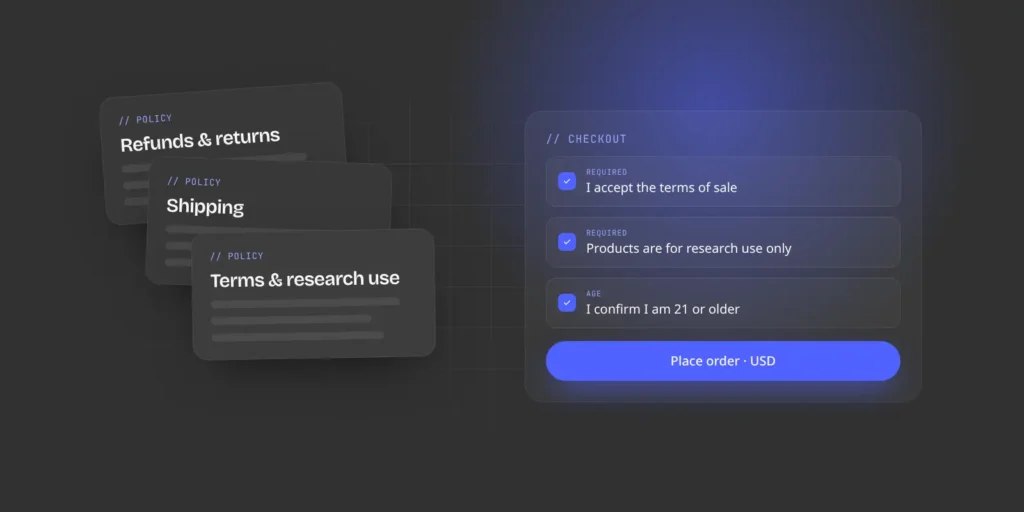
- Visible policies: terms, refunds, shipping, privacy and contact details
- Batch-specific COAs showing product quality (see our guide on displaying COAs on a peptide store)
- A working checkout with clear pricing and order confirmation
Your website is a big part of the application. Fixing problems before you apply is faster than being declined and starting again.
What it costs
Expect to pay more than mainstream rates. Typical costs include:
- Higher processing rates, often several percent per transaction
- A rolling reserve: a share of each sale held back for a set period, then released. Some processors advertise around 10% held for 3 to 6 months for new high-risk accounts, often reduced after a clean track record.
- Setup, monthly or chargeback fees, depending on the provider
Plan your cash flow around the reserve, since it can tie up a meaningful amount in your first months. Ask exactly how and when it’s released before you sign.
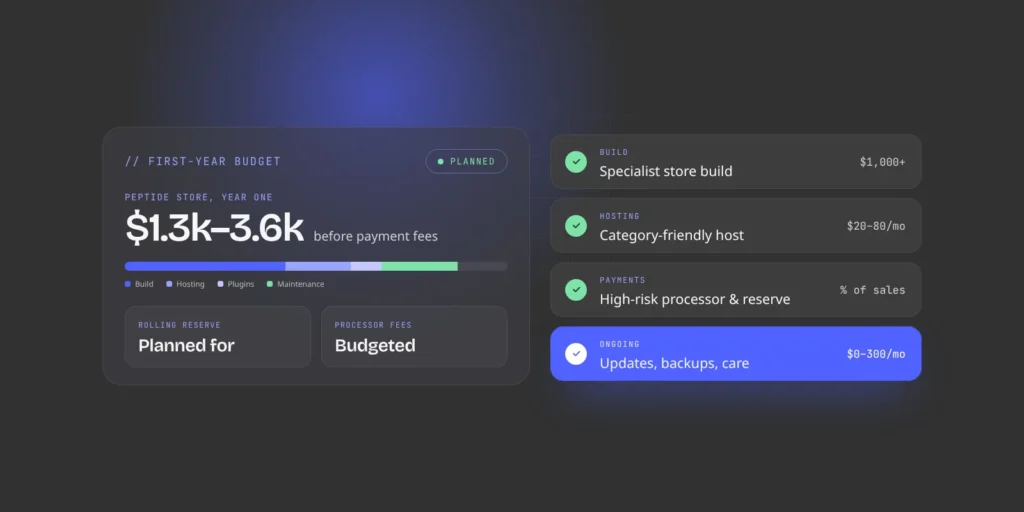
For a full first-year budget, including the build, hosting and maintenance, see how much a peptide store website costs.
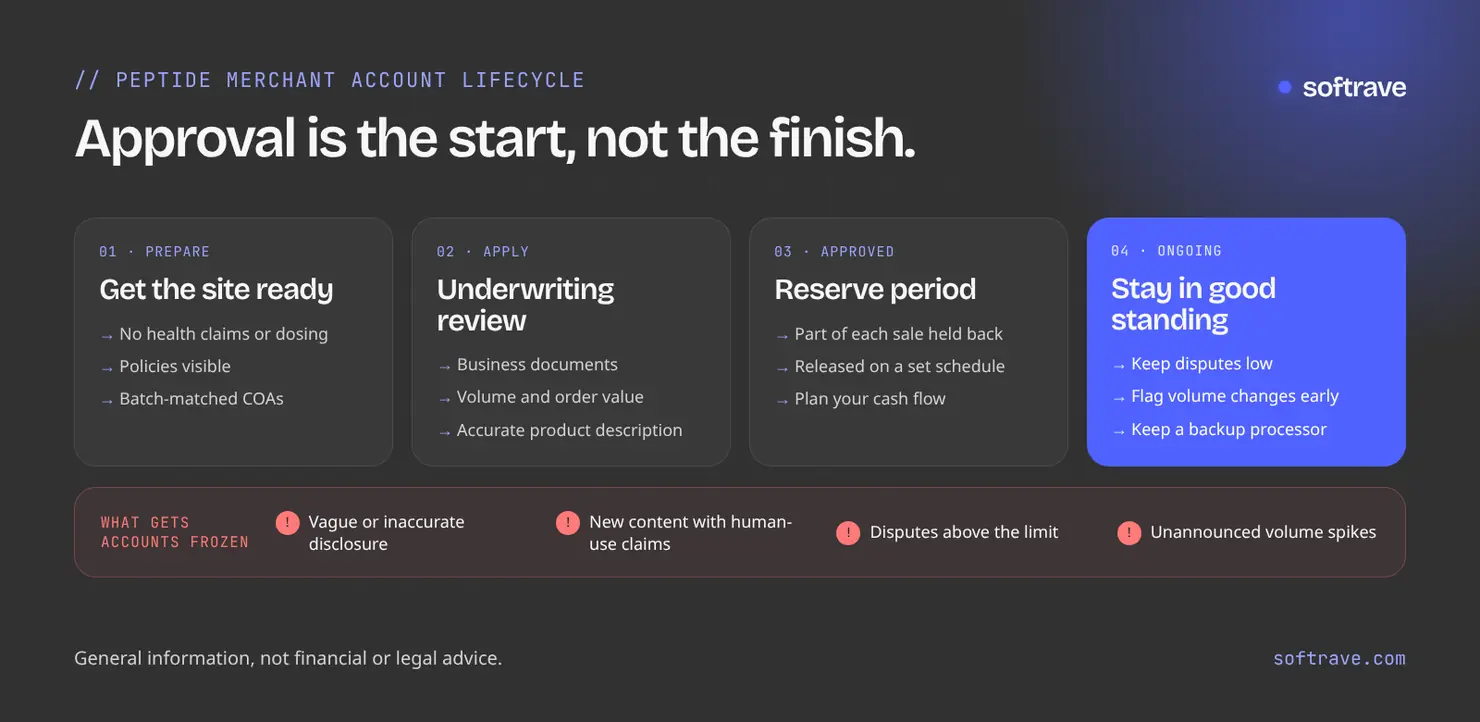
Why approved accounts still get frozen
Approval isn’t the finish line. The most common reasons accounts are frozen or closed later:
- Inaccurate disclosure. Describing the business vaguely (“supplements,” “health products”) to get approved, then being found out during a review.
- Website drift. New products, blog posts or marketing that add the human-use claims underwriting approved you without.
- Too many disputes. Chargebacks and fraud reports above your processor’s limits.
- Sudden volume spikes well above what you said to expect, without telling your processor first.
Know your dispute limits
Card networks monitor disputes closely. Under Visa’s Acquirer Monitoring Program (VAMP), the threshold for flagging a merchant as excessive dropped to 1.5% from April 2026 in most regions, based on fraud reports and disputes compared with settled transactions. Processors often apply their own limits on top, sometimes lower, so ask yours what limits they use.
If an account is terminated for serious problems, the business can be added to the MATCH list, a shared industry database that can keep you from getting a new merchant account for up to five years. Avoiding that matters more than any single month’s sales.
How to keep disputes low
- Use a recognizable billing descriptor, so customers recognize the charge on their statement
- Ship fast and send tracking automatically
- Answer support emails quickly. Many chargebacks start as unanswered questions
- Make your refund policy clear and easy to find before checkout
- Use fraud screening and 3D Secure where your processor supports it
- Send order confirmation emails that match what appears on the card statement
Have a backup option
Relying on a single processor means one decision can stop all your sales. Many established peptide stores keep a second approved processor, or an alternative payment method, ready to switch on. Set it up properly, with the second provider fully informed about your business.
Never route payments through another business’s account or misdescribe your products to get approved. That’s known as transaction laundering, and it can lead to account termination, a MATCH listing and legal trouble.
Payment readiness checklist
- Business documents and bank statements ready
- Site reviewed for health claims, dosing content and testimonials
- Policies complete and visible
- Batch-specific COAs on every product
- Accurate description of your products in the application
- Reserve terms and dispute limits understood before signing
- Billing descriptor, tracking emails and support process set up
- Backup payment option planned
Get your store payment-ready
Softrave builds and fixes peptide stores to be ready for underwriting: research-use positioning, complete policies, COA systems and a smooth checkout. Start with a free store health check and we’ll flag what could hold up an application. Read more about our peptide store website development service, or see why peptide stores get rejected. To see finished builds, look at our Lumana Bio Labs and Pure Peptides Labs case studies.
Frequently asked questions
Can I use Stripe or PayPal for a peptide store?
Generally no. Stripe lists incorrectly labeled research chemicals as prohibited, WooPayments prohibits peptides and other research chemicals, and PayPal treats the category as high-risk. Most peptide stores use a high-risk processor.
What is a rolling reserve?
A share of each sale that the processor holds back for a set period, then releases. For new high-risk accounts it is commonly around 10% held for 3 to 6 months, and is often reduced after a clean track record.
What dispute rate gets a merchant flagged?
Under Visa's Acquirer Monitoring Program, the merchant threshold dropped to 1.5% from April 2026 in most regions. Many processors apply their own, sometimes lower, limits.
What is the MATCH list?
A shared industry database of merchants whose accounts were terminated for serious problems. A listing can stop a business from getting a new merchant account for up to five years.